



Yes, our inventory is accurate!
 Qualifies for Free Ground Economy Shipping (CONUS Only)
A 6-inch f/2.2 smart telescope that shows faint galaxies and nebulae in minutes
Why we like the Origin Mark II:
- The most light of any smart telescope we sell: a 152mm (6") RASA at f/2.2 has roughly 7–8× the light-collecting area of a 50mm smart telescope, so faint galaxies and nebulae show up after a few minutes instead of an hour. Sky at Night Magazine went from box to imaging in under five minutes and rated it 4.5 out of 5.
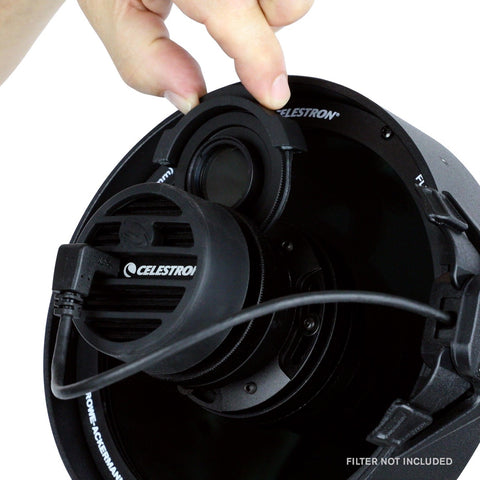
- Filters you can change: a built-in filter drawer takes standard 1.25" and 2" filters, so you can use a nebula filter from the suburbs and pull it out for galaxies under dark skies. Most smart telescopes have fixed filters.
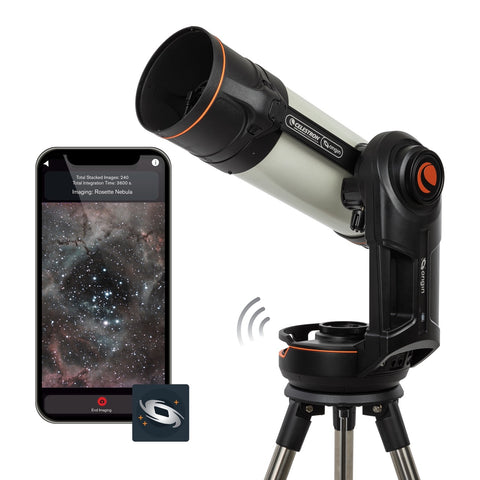
- Made for sharing: several phones and tablets can watch the live image at once, and you can cast it to a TV, which makes it a favorite for families, schools and star parties.
- Worth knowing: the full system weighs 18.9kg (41.6lb) in three pieces, so it's more of a backyard observatory than a travel scope. Like any RASA, it may need occasional collimation.
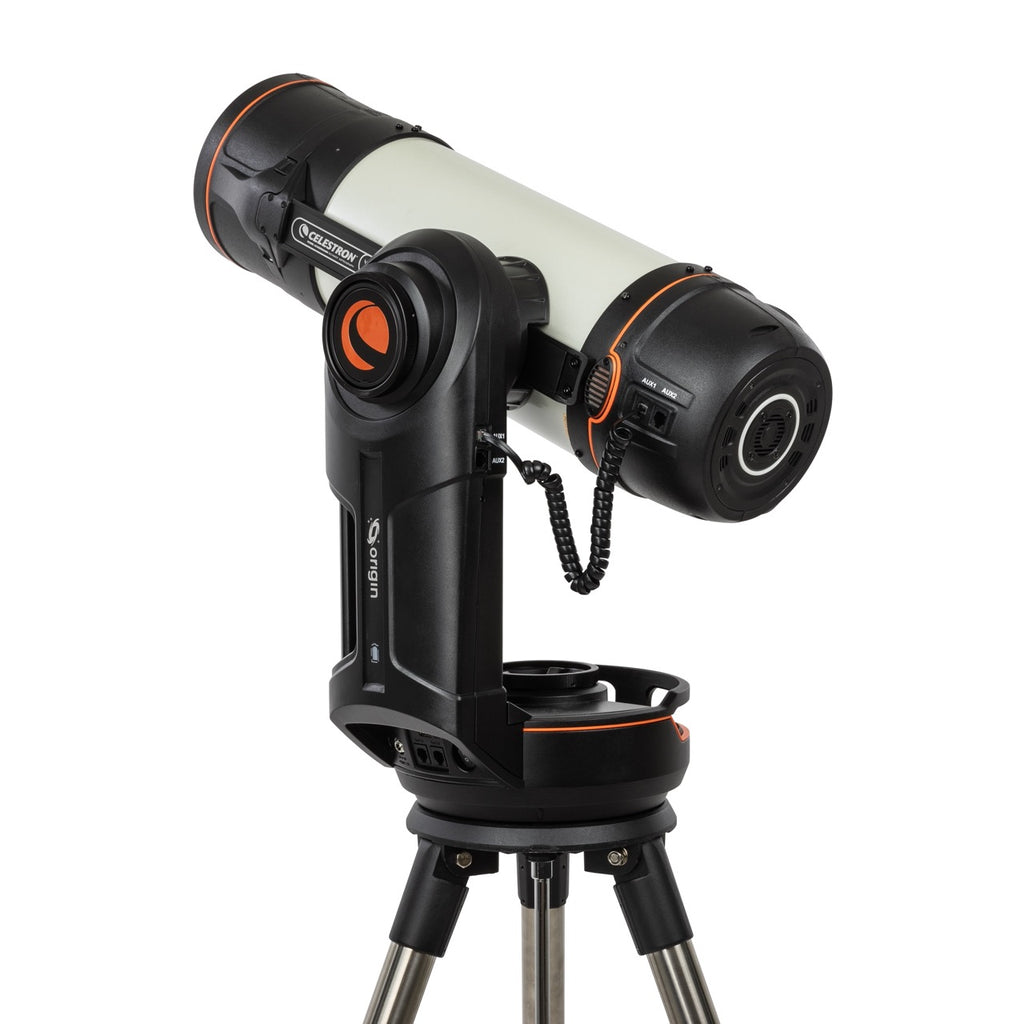
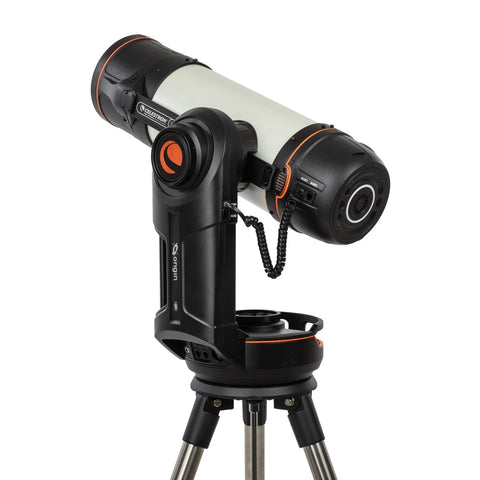
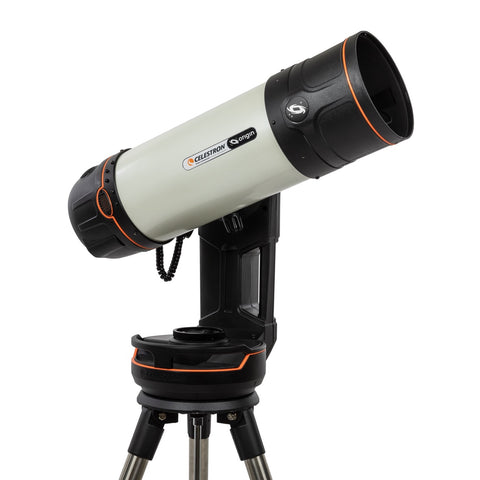
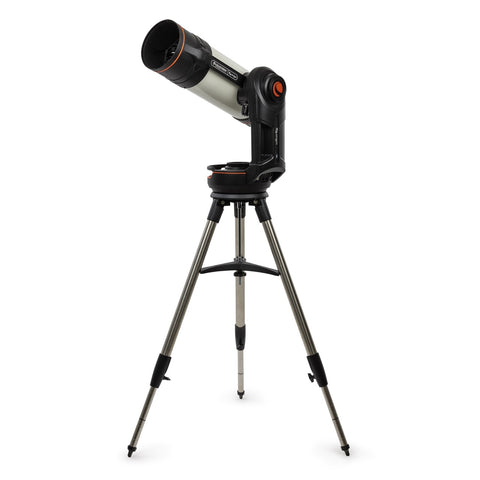
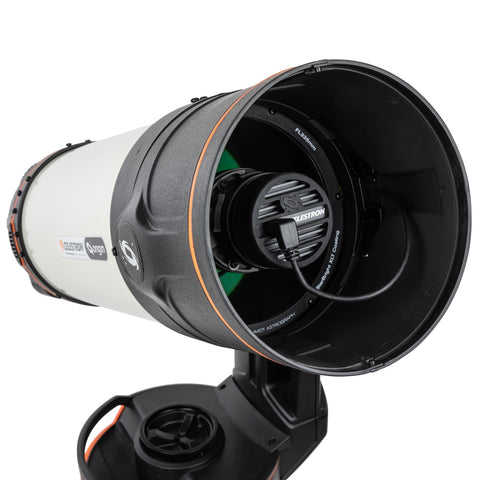
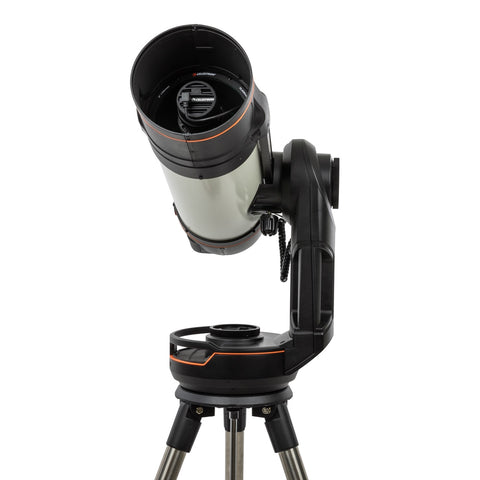
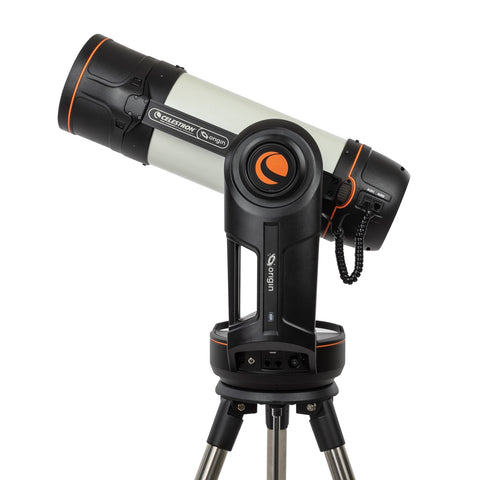
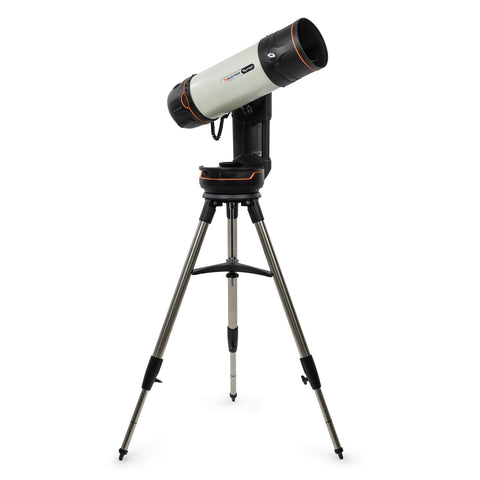
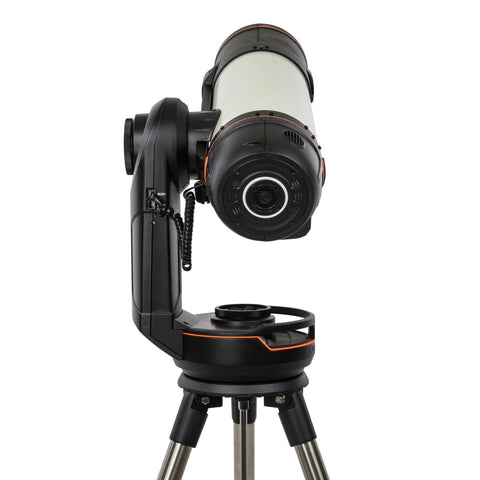
The Celestron Origin Mark II is an all-in-one smart telescope built around Celestron's 6" Rowe-Ackermann Schmidt Astrograph (RASA), with the camera mounted at the front of the tube for an extremely fast f/2.2 system. Set it outside, turn it on and connect the app: it focuses, aligns with StarSense and is ready to image in about two minutes. The camera captures 10-second exposures, the app stacks and processes them as they come in, and you watch a galaxy or nebula appear in color on your phone, tablet or TV. Mark II adds a sharper Sony IMX678 Starvis 2 camera and Mosaic Mode for targets bigger than one frame.
Key specs: 152mm (6") f/2.2 RASA, 335mm focal length · Sony IMX678 color camera, 8.3MP · 1.32° × 0.75° field · 1.48″/pixel · built-in 1.25"/2" filter drawer · autofocus and dew heater · internal LiFePO4 battery (6+ hours) · 18.9kg (41.6lb) full system

What you'll see
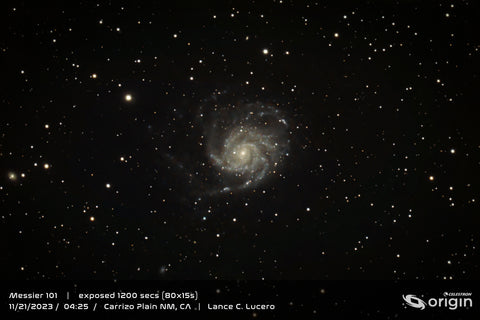
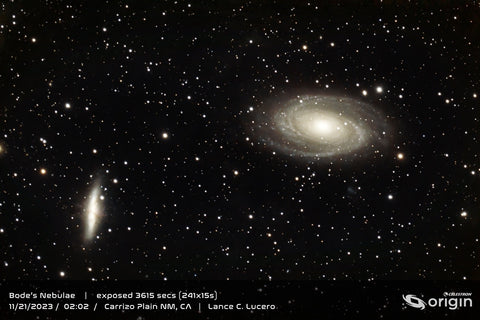
- Galaxies: the Whirlpool, Pinwheel, Sombrero and Fireworks Galaxies, Bode's Galaxy and the Leo Triplet, with spiral arms and dust lanes.
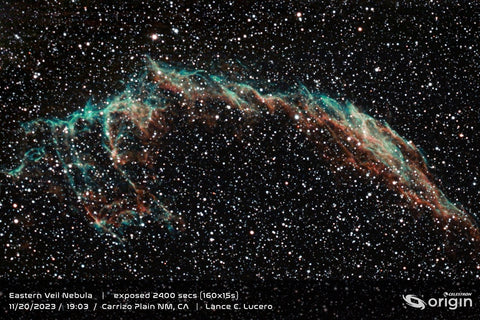
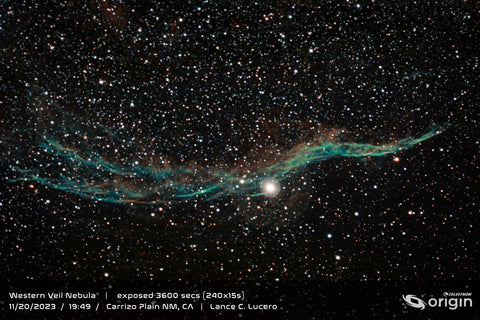
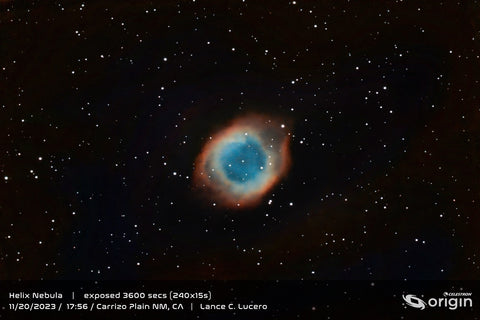
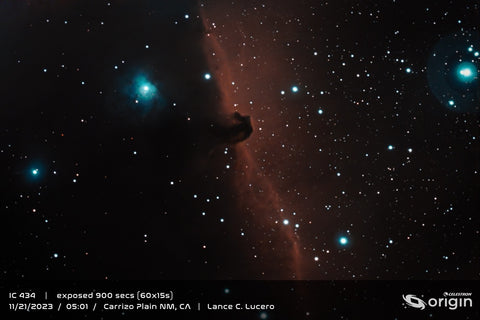
- Nebulae: the Veil, Dumbbell, Ring, Helix, Eagle, Lagoon and Orion Nebulae, and the Horsehead Nebula.
- Large targets in Mosaic Mode: the Andromeda Galaxy, the Pleiades and the full Veil Nebula, captured as overlapping tiles and stitched automatically.
- Star clusters: the Hercules Cluster, M15 and the Double Cluster.
- At night here on Earth: the fast optics work almost like night vision for looking around a dark yard or campsite.

Why it's easy to use
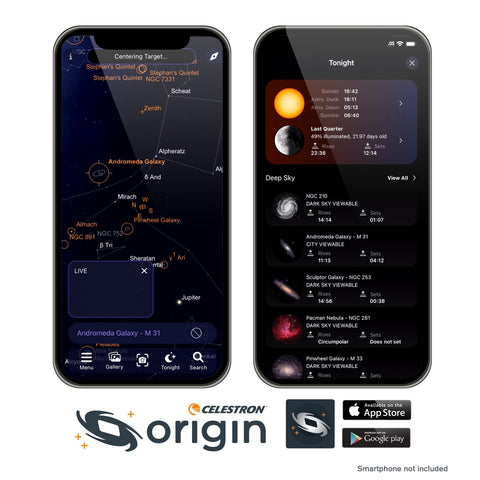
There's no polar alignment, star alignment or focusing by hand. StarSense takes pictures of the sky and works out where it's pointing, then the app's planetarium view (powered by SkySafari) lets you tap a target or pick from a Tonight's Best list. Origin centers it, tracks it, keeps dew off the corrector, and rejects frames with small tracking errors.
The processing is not generative AI: it stacks and sharpens your own data the way an experienced imager would. When you're ready to do more, Origin saves the raw frames for your own processing, runs scheduled sessions overnight, and supports a wedge and the StarSense Autoguider for longer exposures.
Using Origin in Colorado
- Suburban skies: the sample images in our gallery were taken with an Origin from Aurora, on the east side of the Denver metro. For nebulae under city glow, add the Nebula Filter for Origin.
- Cold nights: the built-in dew heater keeps the front lens clear on frosty nights. Charge the battery indoors, and plan on shorter run times in deep cold.
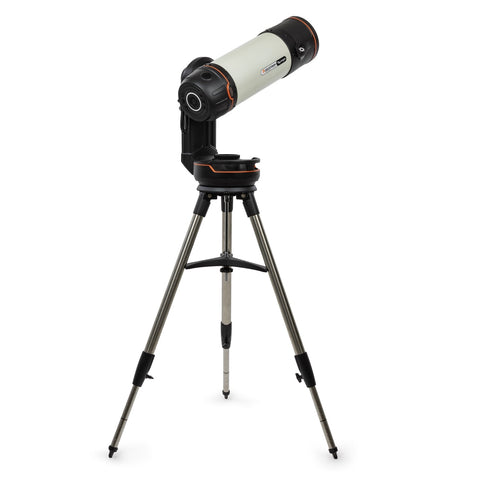
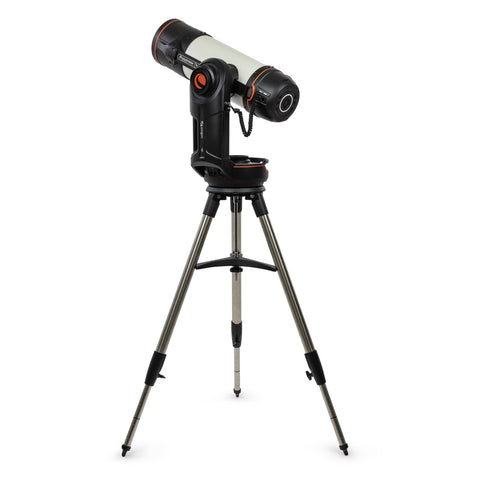
- Dark-sky trips: the tube, mount and tripod each weigh 17lb or less and come apart without tools, and Origin makes its own Wi-Fi network, so it works anywhere you can drive.
What to add for the best results
- Nebula Filter for Celestron Origin: passes H-alpha, H-beta and OIII for much stronger nebula color from light-polluted skies.
- Origin Filter Drawer Kit: extra drawers so you can keep filters mounted and swap them quickly.
- Wedge for Origin, NexStar Evolution/SE: equatorial mode for longer exposures and imaging near the zenith.
- StarSense Autoguider V2: recommended with the wedge for exposures longer than 30 seconds.
- Padded Carrying Bag for Celestron Origin: protects the optical tube in the car.
Celestron Origin Mark II vs. Seestar S50 Pro vs. Draco
| Origin Mark II | Seestar S50 Pro | DwarfLab Draco | |
|---|---|---|---|
| Aperture | 152mm (f/2.2) | 50mm (f/5.2) | 90mm (f/3.8) |
| Filters | Interchangeable 1.25"/2" drawer | Built in | Built in |
| Weight | 18.9kg (41.6lb), three pieces | 2.8kg (6.2lb) | 5.5kg (12.1lb) |
| Battery | 6+ hours | About 9 hours | About 5 hours |
| Best for | The brightest, most detailed images; sharing with a group | Portability and price | A middle step with long guided exposures |
Choose the Origin Mark II if image quality matters more than portability. See everything for it in our Celestron Origin collection.
What's in the box
- 6" RASA optical tube with integrated camera, autofocuser, dew heater and dew shield
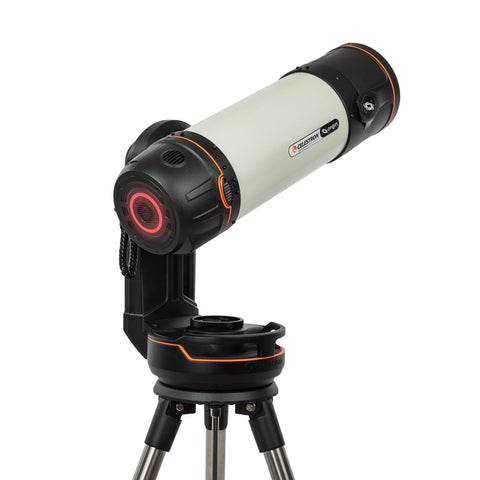
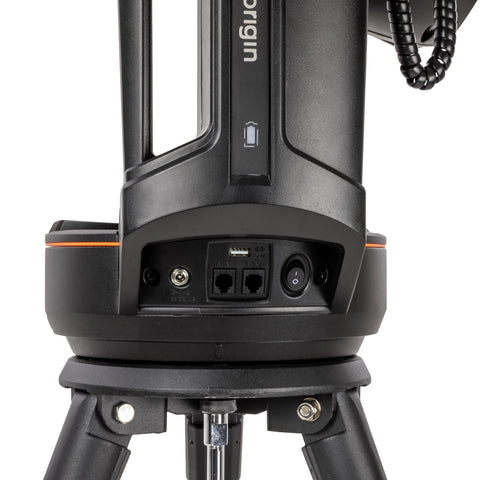
- Single fork-arm GoTo mount with internal lithium battery
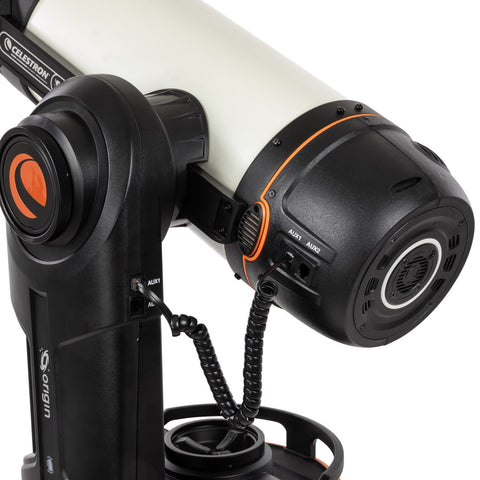
- Built-in computer with Wi-Fi and cooling fans
- Integrated filter drawer
- Full-height tripod
- Lens cap
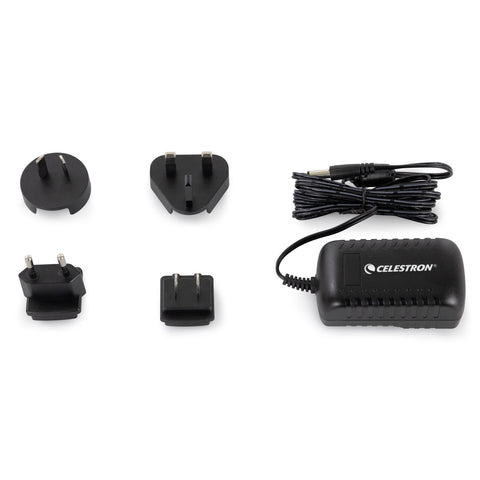
- AC charger
Filters, wedge, autoguider and carrying bag are sold separately.
Celestron Origin Mark II FAQ
Is the Origin good for beginners?
Yes. Setup, alignment, focusing, tracking and processing are automatic, and the app suggests the best targets for your location and time. It's also capable enough for experienced imagers, who can save raw files and add a wedge and autoguider.
What's new in the Mark II?
A new Sony IMX678 Starvis 2 color camera (8.3MP, 2.0µm pixels) replaces the original IMX178, for finer detail and a wider 16:9 field, and Mosaic Mode stitches tiles for large targets. Owners of the original Origin (#12099) can upgrade to the new camera through Celestron.
Origin Mark II or Seestar S50 Pro?
The Origin's 6" aperture at f/2.2 collects far more light, so images are brighter and more detailed in less time. The Seestar S50 Pro weighs 2.8kg and costs much less, so it's the better choice for travel or a first smart telescope on a budget.
Can I see Saturn and Jupiter?
Only small. At 335mm focal length the planets are tiny disks. Origin is designed for deep-sky objects; for planets, a NexStar or Evolution SCT is the better fit.
Can I use filters?
Yes. The filter drawer accepts standard 1.25" and 2" imaging filters. The Nebula Filter for Origin is made for it.
How many people can watch at once?
Several phones and tablets can connect to the live feed at the same time, and you can cast it to a smart TV.
What app does it use?
The free Celestron Origin app powered by SkySafari, for iOS 16 or later and Android 12 or later.
Can I look through it with an eyepiece?
No. The camera sits where an eyepiece would go, and you view the image on a screen.
How long does the battery last?
More than 6 hours on the built-in 97.9Wh LiFePO4 battery, and it can also run from the included AC adapter.
Specifications
| Optics | |
|---|---|
| Optical design | Rowe-Ackermann Schmidt Astrograph (RASA) |
| Aperture | 152mm (5.98") |
| Focal length | 335mm (f/2.2) |
| Central obstruction | 63mm (41% of aperture) |
| Coatings | StarBright XLT |
| Image scale | 1.48″/pixel |
| Filter drawer | Accepts 1.25" or 2" filters |
| Dovetail | CG-5 style |
| Camera | |
| Sensor | Sony IMX678, color, back-illuminated (Starvis 2) |
| Resolution | 8.3MP (3856 × 2180), 2.0µm pixels, 8.9mm diagonal |
| Field of view | 1.32° × 0.75° |
| Mount and electronics | |
| Mount | Computerized GoTo alt-azimuth single fork arm; equatorial with optional wedge |
| Alignment | StarSense automatic alignment |
| Onboard computer | Raspberry Pi 4 Model B with Wi-Fi |
| Focus | Autofocus or manual |
| Dew prevention | Automatic heater in the front lens, removable dew shield |
| Ports | 2 USB-A and Ethernet on the tube; 1 USB-A charging port on the mount; 6 auxiliary ports |
| Power | |
| Battery | Internal LiFePO4, 97.9Wh, 6+ hours |
| Power input | 12V DC adapter (included) |
| Physical | |
| Optical tube | 4.8kg (10.6lb); 610 × 178mm (24 × 7 in) |
| Mount | 7.7kg (17lb) |
| Tripod | 6.35kg (14lb) |
| Total system | 18.9kg (41.6lb) |
| App | Celestron Origin, iOS 16+ and Android 12+ |
| Model | Celestron #12100 |